
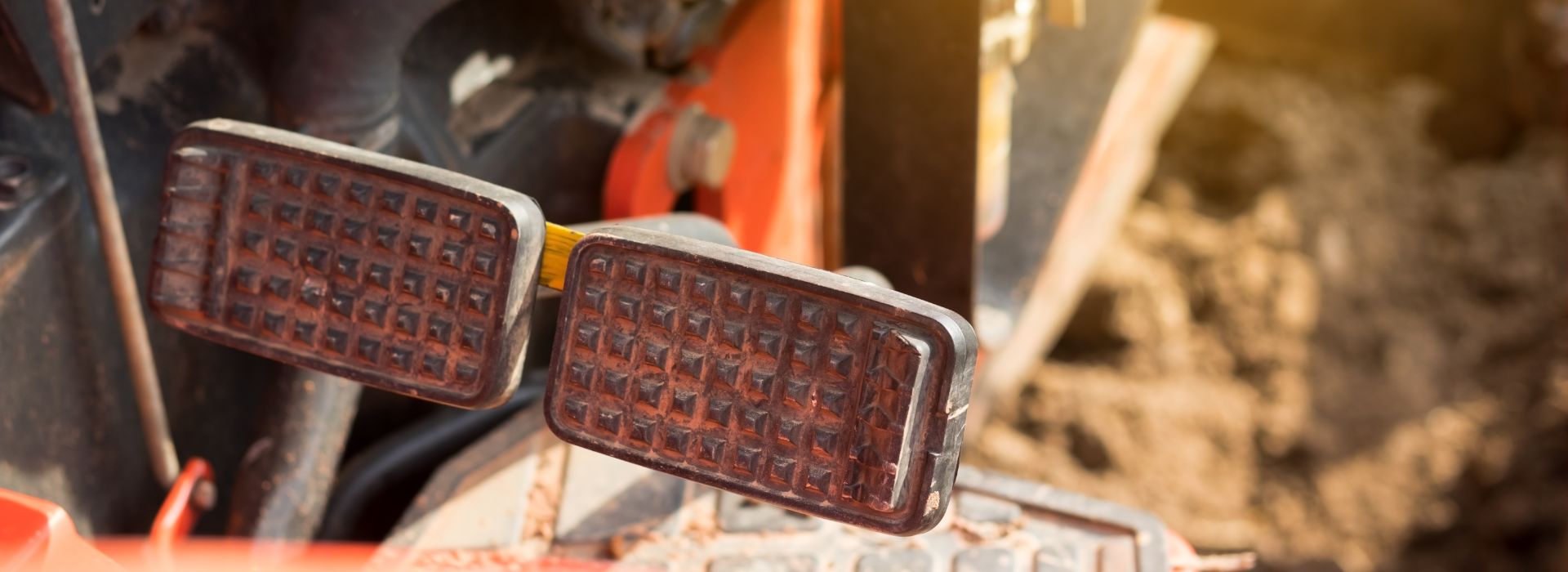
TLDR: Spongy, uneven or weak Massey Ferguson brakes can be caused by incorrect adjustment, worn brake discs or linings, hydraulic leaks, trapped air, damaged seals or oil contamination. This guide explains the main causes of excessive pedal travel and tractors pulling to one side, plus the parts commonly required for repair.
A Massey Ferguson tractor should brake smoothly, predictably and evenly. If the brake pedal suddenly feels soft or spongy, travels further than normal, or the tractor pulls noticeably to one side when braking, something in the braking system needs attention.
Problems with Massey Ferguson brakes can range from relatively straightforward adjustment issues to worn brake components, hydraulic leaks or oil contamination. Because tractor brakes are safety-critical, changes in braking performance should never be ignored.
Ireland’s Health and Safety Authority recommends that tractor brakes are regularly checked, kept balanced and, for road use, have the brake pedals correctly coupled together.
Below are some of the main areas to investigate when Massey Ferguson tractor brakes feel spongy, have excessive pedal travel or cause the tractor to pull to one side.
-
Check Brake Pedal Adjustment First
On many older Massey Ferguson tractors, the left and right brakes can be operated independently. This is useful when manoeuvring in the field, but both sides need to be correctly adjusted and balanced for normal braking and road use.
If one pedal has considerably more travel than the other, one brake may begin applying before the opposite side. The tractor can then pull sharply towards the wheel with the stronger braking action.
Possible causes include:
- Incorrect brake pedal free play
- Unequal linkage adjustment
- Worn clevis pins or linkage joints
- Sticking brake linkages
- Incorrectly adjusted brake mechanisms
Before replacing Massey Ferguson brake parts, compare the movement of both pedals and inspect the complete linkage.
The HSA specifically advises operators to check that tractor brakes are balanced and that the brake pedals are coupled together during normal operation.
Adjustment procedures vary considerably between Massey Ferguson models, so specifications should always be checked against the correct operator or workshop manual.
-
Hydraulic Leaks Can Cause a Spongy Brake Pedal
Some Massey Ferguson models use hydraulically actuated braking systems. If fluid or oil escapes from the system, braking pressure may drop.
A leak can result in:
- Excessive pedal travel
- A pedal that gradually sinks
- Soft or spongy braking
- Reduced braking on one side
- The need to pump the pedal before the brakes work properly
Check around brake master cylinders, brake pipes, hoses, unions, slave cylinders and axle housings where applicable.
Even a relatively small leak can be significant.
A falling fluid level is another strong indication of a leak. Continually topping up the reservoir without identifying the source is not a suitable repair.
If hydraulic components are involved, take care when checking pressurised systems. The HSA warns against using your fingers to search for hydraulic leaks because pressurised oil can penetrate the skin.
-
Air in the Brake System
Where a tractor uses a hydraulic brake circuit, trapped air is a common reason for a soft or spongy pedal.
Brake fluid or hydraulic oil is effectively incompressible, whereas air can be compressed. When you press the pedal, some pedal movement can therefore be used compressing trapped air rather than immediately applying the brakes.
Air can enter following:
- A leaking hydraulic line
- Replacement of a master or slave cylinder
- Running the fluid reservoir too low
- Opening the brake circuit during repairs
The system may need to be correctly bled according to the procedure specified for the tractor.
If you repeatedly bleed the brakes but the problem returns, there is likely to be a leak or another fault allowing air back into the system.
-
Worn Brake Discs, Plates or Linings
Normal wear is another major cause of Massey Ferguson brakes not working as effectively as they once did.
Depending on the model, a Massey Ferguson may use dry drum brakes, mechanically operated brakes or oil-immersed wet disc brakes.
As brake discs, friction plates or linings wear, additional movement may be required before the braking surfaces make proper contact. This can produce increased pedal travel and weaker braking performance.
Uneven wear can also result in one side braking harder than the other.
Typical Massey Ferguson brake parts that may eventually require replacement include brake discs, friction plates, intermediate plates, brake linings, seals, return springs and actuator components.
Massey Ferguson provides access to operator information and manuals through its official Service & Information resources, which can help owners identify the correct maintenance procedures for individual models.
-
Oil or Grease Contamination
Contamination is particularly important on tractors using friction linings or brake discs. Oil leaking from an axle seal, hub seal or transmission seal can reach the braking surfaces. Once friction material becomes contaminated with oil, braking performance can become unpredictable. One side may grip normally while the contaminated side produces much less braking force. Pressing both pedals together can then make the tractor pull towards the stronger brake.
Symptoms may include:
- Tractor pulling under braking
- Poor braking despite correct adjustment
- Braking performance changing as the brakes warm up
- Oil visible around the axle or brake housing
Replacing the friction material without fixing the leaking seal first is unlikely to provide a lasting repair. The leak needs to be identified and corrected before new braking components are installed.
-
Worn Brake Seals and Actuator Components
Internal seals can also deteriorate with age.
If a piston or actuator seal leaks internally, pressure may bypass the component rather than fully applying the brake. This can result in a pedal that feels soft or one brake that responds more slowly than the other. Depending on the model, diagnosis may involve checking master cylinders, slave cylinders, brake pistons, seals, O-rings and internal actuating mechanisms.
For difficult faults, Massey Ferguson recommends appropriate service and diagnostic support through its dealer network. Its servicing programme includes checking brake condition and performance as part of machine inspections.
-
Check Tyres Before Assuming the Brakes Are at Fault
A tractor pulling to one side does not automatically mean there is an internal brake failure.
Check both rear tyres for:
- Unequal tyre pressures
- Considerably different tread depths
- Different tyre sizes
- Damage
- Poor traction on one side
Unequal tyre grip can exaggerate what appears to be uneven braking. Weight distribution, attached implements and road conditions can also influence braking behaviour.
The HSA’s guidance on tractor braking advises checking tyre condition and pressures as well as ensuring weight is evenly distributed and the brakes are balanced.
What to Check When Tractor Brakes Are Not Working Properly
If you are dealing with tractor brakes not working correctly, a sensible inspection sequence is to start with the simplest external checks. Compare left and right pedal travel, check pedal linkage and adjustment, inspect for visible leaks and confirm tyre pressures. Next, check fluid levels where applicable and look for evidence of oil around brake or axle housings.
If the external components appear correct but braking remains weak or uneven, inspection of the internal brake components may be required.
Possible replacement parts can include:
- Brake discs or friction plates
- Brake linings
- Brake master cylinders
- Slave cylinders
- Brake piston and seal kits
- Axle or brake housing seals
- Brake springs
- Pedal linkage bushes and pins
- Brake pipes and hoses
- Brake fluid or specified transmission/hydraulic oil
Always confirm the correct specification for the exact Massey Ferguson model before ordering components.
Massey Ferguson’s official parts resources include electronic parts information for identifying replacement components. [
Likely Replacement Parts
Depending on the tractor model and the fault found, commonly required Massey Ferguson brake parts may include:
- Brake discs or friction plates
- Brake linings or shoes
- Brake master cylinder
- Brake slave or wheel cylinder
- Brake piston seal kits
- O-rings and hydraulic seals
- Axle or brake housing oil seals
- Brake return springs
- Pedal linkage bushes, clevis pins and pins
- Brake pipes and flexible hoses
- Brake fluid, where specified
- Correct transmission/hydraulic oil for wet-brake systems
It is important to identify the underlying cause before ordering parts. For example, oil-contaminated brake discs may also require replacement of the leaking axle or brake housing seal that caused the contamination.
Don’t Ignore Changes in Braking Performance
A small change in brake pedal feel can be an early warning of a developing problem.
Excessive pedal movement may indicate incorrect adjustment, worn components, air in the system or failing seals. Pulling to one side may point towards uneven adjustment, contamination, a hydraulic fault or wear affecting only one side.
Whatever the cause, problems with Massey Ferguson tractor brakes should be investigated before the tractor returns to normal work or road use.
The HSA advises that agricultural tractors should be maintained in good working condition and that brakes should be checked regularly and remain in sound working order.
Finding the fault early can often prevent further damage, reduce repair costs and, most importantly, ensure that the tractor stops safely when it needs to.
Need to purchase replacement brake parts for your Massey Ferguson Tractor? Browse and Buy now from our online shop.
Would like to speak with a member of our team? Feel free to reach out on our Contact page.